What Is the Best Aroma Diffuser Type in 2026?
Choosing the best Aroma Diffuser in 2026 depends less on a trend than on the room, routine, and desired level of control. Ultrasonic models suit quiet bedrooms and small spaces. Nebulizing units disperse oil without water, while heat and evaporative designs offer simpler alternatives. Each has trade-offs in noise, upkeep, output, and oil use. No type wins everywhere.
Grand View Research estimated the global aromatherapy market at about US$7.36 billion in 2023 and projected continued growth through 2030. That figure covers aromatherapy broadly, not diffuser sales alone. It signals consumer interest, but it cannot tell us which device performs best on a bedside table or across a large living room. Market growth is not proof of product quality.
Safety and practical use matter, too. Aromatherapy educator Robert Tisserand emphasizes a useful principle: “Natural does not automatically mean safe.” Follow each device’s instructions, use oils as directed, and consider household sensitivities. Small details matter. A bright indicator light, a hard-to-clean reservoir, or a strong scent lingering after shutdown can shape everyday satisfaction. I have to admit that “quiet” and “easy to clean” are often more useful claims than dramatic promises about wellness. This guide compares diffuser types by operation, room fit, maintenance, and realistic advantages, so readers can choose with clearer expectations.
How Aroma Diffusers Disperse Essential Oils
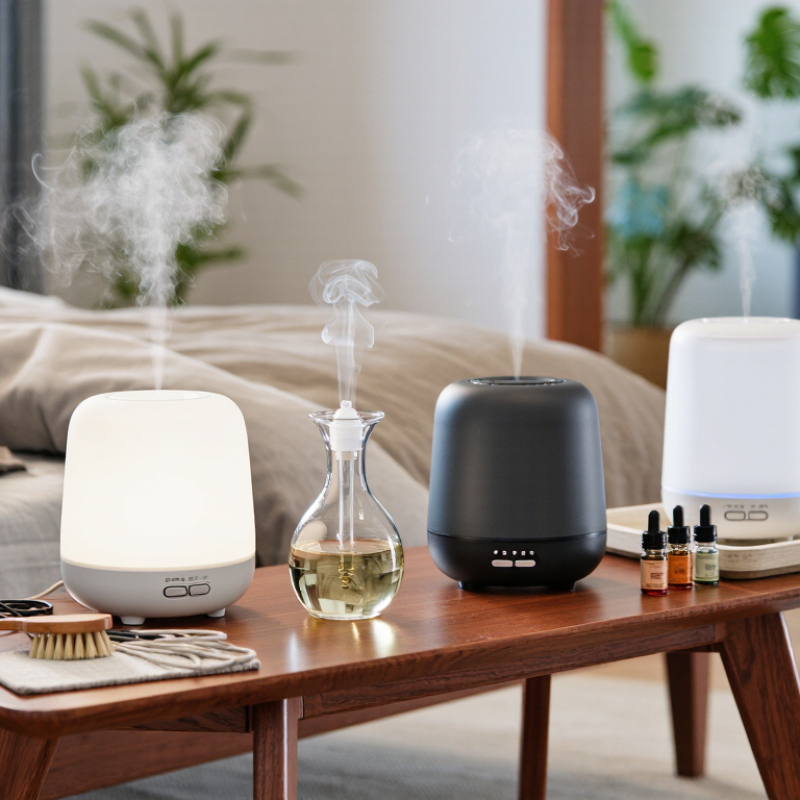
Aroma diffusers disperse essential oils in different ways, and the mechanism changes what enters the room air. Ultrasonic models vibrate water into a cool mist that carries diluted oil droplets. Nebulizing models use airflow to break undiluted oil into fine droplets, without adding water. Evaporative units pass air over an oil-soaked pad; heat-based units warm the oil to encourage evaporation. These outputs are not identical: a visible mist is usually suspended droplets, not pure essential-oil vapor.
Small detail, big difference.
Room conditions matter too. Air movement, room size, run time, and oil concentration can all affect how quickly the scent spreads and fades. The U.S. Environmental Protection Agency reports that concentrations of some indoor pollutants are often two to five times outdoor levels. That figure is not specific to diffusers, but it is a useful reminder that indoor air is not automatically clean. Use short sessions, follow the device instructions, and ventilate when needed. A strong scent is not proof of better dispersion. Frankly, diffuser comparisons can be messy: independent testing rarely measures every device under the same room conditions. EPA, “The Inside Story: A Guide to Indoor Air Quality.”
The Main Types of Aroma Diffusers in 2026
What Is the Best Aroma Diffuser Type in 2026?
The Main Types of Aroma Diffusers in 2026
Ultrasonic diffusers use water and vibration to disperse a scented mist. They are often a practical choice for bedrooms because many models run quietly. The mist also adds a little moisture, which may not suit already humid rooms. Quiet, but not magic. Check the tank’s cleaning instructions; standing water and neglected surfaces can become a maintenance problem.
Nebulizing diffusers disperse oil without adding water, usually creating a more concentrated aroma. They can suit larger spaces, but may use oil faster and sound louder. Evaporative models use airflow through a pad or filter. Their scent can be gentler, though it may fade as the most volatile components evaporate. Heat-based diffusers warm the oil, but warmth can change how fragrance is released.
Market figures offer context, not a winner. Grand View Research valued the global essential oils market at USD 23.74 billion in 2023 and projected 11.8% annual growth from 2024 to 2030. That report tracks oils, not diffuser performance, so it cannot prove one type works best. This comparison is not perfectly neat: room size, cleaning habits, noise tolerance, and oil use all matter. Before choosing, consider where the diffuser will sit and how often you will maintain it.
How Diffuser Types Compare in Performance and Use
Ultrasonic diffusers use water and vibration to release a cool mist. They suit bedrooms and living rooms where a gentle scent is preferred. The visible plume is easy to notice, though it adds a little moisture and needs regular cleaning. Stale water can leave a faint smell. Not ideal for everyone.
Nebulizing diffusers disperse undiluted oil in fine droplets, often creating a stronger scent without water. They can fill a larger area quickly, but may use oil faster and sound louder.
Heat-based models are simple and quiet; warmth can shift an aroma’s character, and the hot surface deserves care. Evaporative types use airflow across an absorbent pad. Their scent tends to stay close to the device, making them practical for a desk or small room.
The best fit depends on room size, noise tolerance, and how much scent feels comfortable. Check the manufacturer’s guidance for compatible oils and cleaning, since designs differ. A powerful diffuser is not automatically better. Try a short session, then adjust placement or duration. Small changes matter. One detail is easy to miss: curtains and soft furnishings can hold fragrance after the device is off, so a lighter setting may work better than expected.
Key Factors for Choosing an Aroma Diffuser
What Is the Best Aroma Diffuser Type in 2026?
Room size and daily habits matter more than the latest features.
Ultrasonic diffuser uses water and a small amount of oil, producing a cool mist that may add slight humidity. It can suit a bedroom or desk, but the tank needs regular cleaning to prevent residue. A small tank may run dry sooner than expected.
Nebulizing diffusers disperse oil without water, so their scent can feel more concentrated. They may use oil faster and sound louder, which is worth considering in a quiet room.
Evaporative models use airflow to carry scent from a pad or filter; their output can be gentler, though it may fade as the oil evaporates.
Heat-based models are simple, but warmth can change an oil’s aroma.
Check the room’s size, noise level, run-time settings, and ease of cleaning before choosing. I find cleaning easy to underestimate; dried oil can be stubborn around narrow openings. Also consider who shares the space. Follow the device instructions, ventilate the room, and check reliable veterinary guidance before diffusing oils around pets. Start with a short run. Then adjust based on how the room actually smells, not just its listed coverage.
Which Diffuser Type Best Fits Different Needs
Match the room. An ultrasonic diffuser suits bedrooms and home offices where a quiet, visible mist feels welcome. It uses water, so the scent is usually gentler than with a nebulizing model. But it also adds moisture. The U.S. Environmental Protection Agency’s A Brief Guide to Mold, Moisture and Your Home recommends indoor relative humidity below 60%, ideally 30–50%. In a small, damp room, check humidity before running one for hours.
For a stronger aroma without added water vapor, a nebulizing diffuser disperses undiluted oil. It can suit a larger living area, though its scent may feel overpowering in a compact bedroom. It may also use oil faster. An evaporative diffuser, which moves air across an absorbent pad, is a practical fit for a desk or travel bag. Expect a softer scent, and replace the pad when aromas linger.
Heat-based models are simple and often quiet, but warming can alter an oil’s scent profile. That trade-off is easy to overlook. Choose by room size, desired intensity, cleaning tolerance, and sensitivity to fragrance—not mist output alone. Keep the device away from pets and people who react to scented products, and follow its care instructions.
What Is the Best Aroma Diffuser Type in 2026?
Compare diffuser types by how well they suit common needs. Scores are qualitative guidance based on each type’s typical design—not laboratory measurements. Actual performance varies by model, room, and oil.
Quick guide: Ultrasonic diffusers are a versatile choice for everyday use. Nebulizing diffusers disperse undiluted oil without water and can provide a stronger aroma. Evaporative models use airflow through an absorbent pad or wick, while heat diffusers use warmth to disperse fragrance. Check each product’s room-size guidance and cleaning instructions.