What is Fiber Stick and How Does it Work?
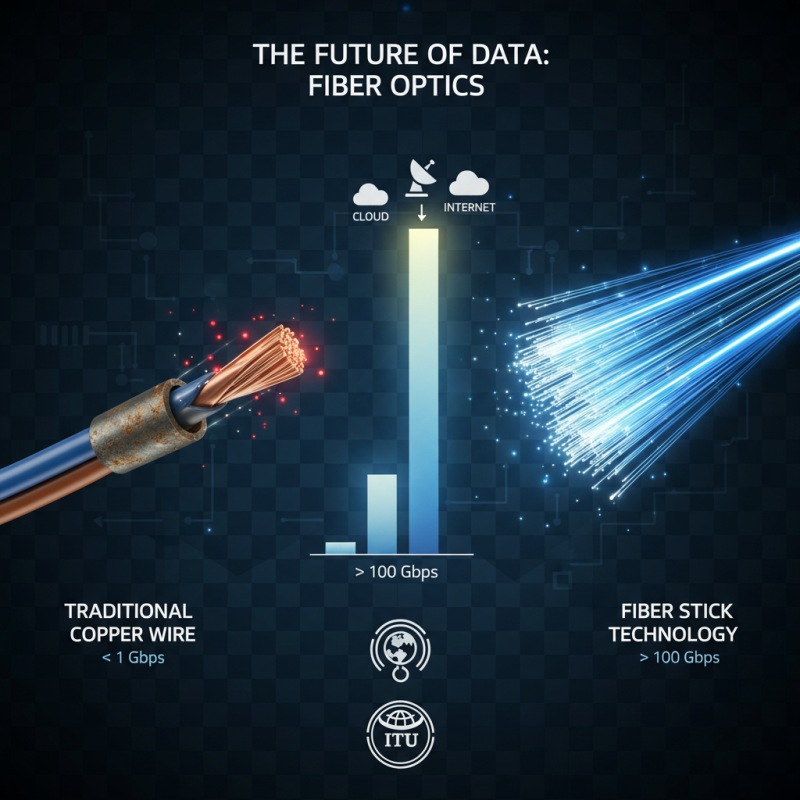
In the rapidly evolving world of technology, the Fiber Stick has emerged as a significant innovation. This device enhances internet connectivity, boasting speeds that surpass traditional broadband. Industry reports indicate that fiber optic technology can deliver speeds of up to 1 Gbps, revolutionizing how we connect to the digital world.
However, understanding how the Fiber Stick operates is crucial. The device uses fiber optics to transmit data through light signals. This method allows for faster and more reliable connections. Yet, some users still grapple with installation complexities and compatibility issues with existing systems. These challenges point to a need for clearer guidance and support in adopting this technology.
Despite its potential, the Fiber Stick isn't without limitations. Some users report varying performance based on location and network congestion. Addressing these concerns is essential for maximizing the benefits of this technology and ensuring wider accessibility. The conversation around Fiber Sticks continues to grow, highlighting both the advantages and the areas requiring improvement.
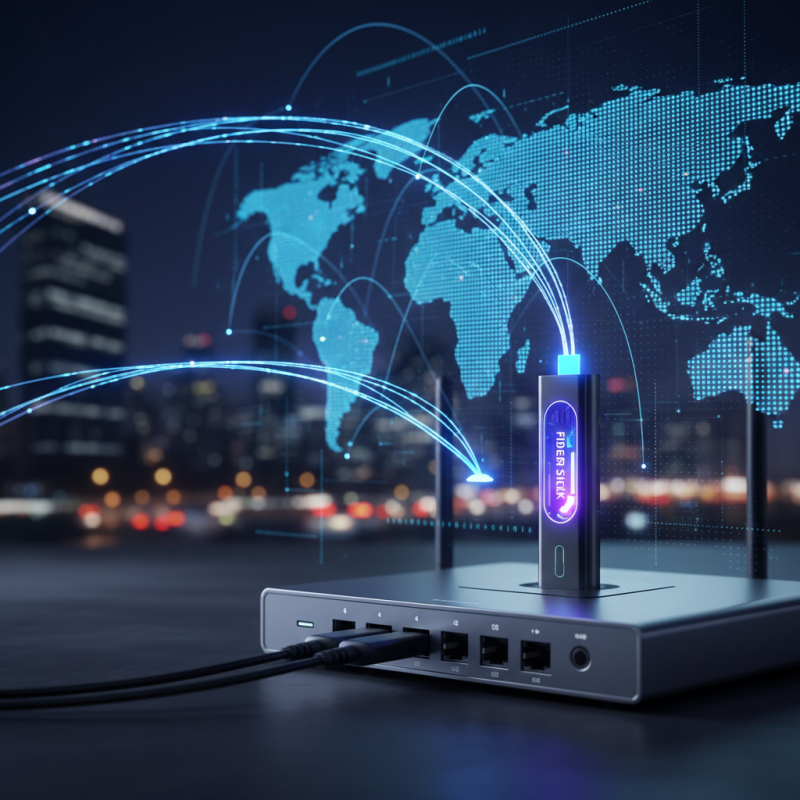
What is Fiber Stick: Definition and Key Characteristics
Fiber Stick is an innovative tool designed for easy and efficient fiber application. It primarily consists of a slim, flexible body that supports various types of fibers. The design allows users to customize their experience based on the desired look. This tool can help create natural effects, enhancing the user's appearance in a subtle way.
The key characteristics of Fiber Stick include its portability and simplicity. Users can easily carry it in their bags. Its ergonomic design ensures a comfortable grip. Applying fibers is a straightforward process, but mastering it can require practice. Many users find initial applications challenging, resulting in uneven distribution. With practice, the technique improves, leading to better outcomes.
Moreover, the material of the fibers plays a crucial role. They can vary in texture and appearance, affecting the overall look. Some fibers may blend seamlessly, while others may stand out, creating a more dramatic effect. Experimentation is key to finding the right balance. It’s important to embrace the learning curve and enjoy the process of discovery.
Applications of Fiber Stick in Various Industries
Fiber Stick technology is making waves across various industries, mostly due to its versatility and efficiency. In telecommunications, it ensures high-speed data transmission. This is vital for today’s internet-dependent world. In the healthcare sector, Fiber Sticks are used in endoscopy. This allows for minimally invasive procedures, reducing recovery time.
In the manufacturing industry, they provide reliable solutions for monitoring and control. For instance, they can measure temperature or pressure in real time. This makes operations smoother and safer. Construction also benefits, using Fiber Sticks for structural health monitoring. They can detect early signs of stress or damage.
Tip: Always evaluate the specific needs of your industry before implementing Fiber Stick technology. Not every application will yield the best results. Another tip is to keep up with the advancements in Fiber Stick features. They evolve rapidly, and staying informed can make a difference. Note that the implementation process might have a learning curve. Some challenges may arise, requiring adjustments and patience.
Comparison of Fiber Stick to Traditional Fiber Technologies
Fiber Stick technology is an innovative approach to fiber management. Unlike traditional fiber technologies, Fiber Stick enhances data transmission and storage capabilities. It streamlines the process, making it efficient. Many users find it simpler to integrate into existing systems.
Traditional fiber technologies often rely on bulkier setups. They can be complex and require extensive manual labor. Fiber Stick simplifies these aspects. It uses a sleek design, which minimizes space. Installation becomes less daunting compared to older methods. Users appreciate the ease of organization and the reduced chances of tangling.
However, not everything is perfect. Some users criticize Fiber Stick for its limited compatibility with older systems. Transitioning can be challenging and requires careful planning. While the technology shows promise, ongoing improvements are essential. Users need clear guidelines on adapting their infrastructure to utilize it fully.
What is Fiber Stick and How Does it Work? - Comparison of Fiber Stick to Traditional Fiber Technologies
| Aspect |
Fiber Stick |
Traditional Fiber Technologies |
| Material Type |
Optical fiber |
Copper or coaxial cables |
| Installation Ease |
Simple and straightforward |
Complex with multiple steps |
| Data Transmission Speed |
Up to 1 Gbps and beyond |
Typical max of 100 Mbps |
| Distance Capability |
Long-distance (up to 100 km) |
Shorter distances (up to 10 km) |
| Interference |
No electromagnetic interference |
Prone to interference |
| Maintenance |
Low maintenance required |
Higher maintenance needed |
Future Trends and Innovations in Fiber Stick Development
The development of fiber sticks is evolving rapidly. These innovative tools combine functionality with creativity. Many researchers are exploring how to enhance their design for better user experience. Improved materials are being tested continuously. This can lead to lighter sticks that offer greater durability. New textures are also being introduced, providing better grip and control.
Trends indicate a shift towards smart technology integration. Imagine fiber sticks with sensory feedback. They can help users adjust their technique in real time. This allows for more efficient usage. However, the challenge lies in keeping these devices user-friendly. There's a balancing act between high-tech features and simplicity. Some users might feel overwhelmed by too many functions. This shows the need for thoughtful design.
Sustainability is another critical focus. Biodegradable materials are gaining interest. Creating eco-friendly alternatives can help reduce waste. Yet, the effectiveness of these materials is still under scrutiny. There’s potential for improvement, but it requires time and innovation. Continuous testing and feedback are essential to refine these concepts. The future of fiber sticks holds great promise, but it’s not without its challenges.
Fiber Stick Market Growth Overview (2023-2030)