Leave Your Message

What Are the 2026 Best Aroma Stones for Wholesale Buyers?

Choosing the best Aroma Stones for wholesale in 2026 requires more than comparing colors, shapes, and unit prices. Buyers must evaluate material quality, fragrance performance, production consistency, packaging, and supplier reliability. A visually attractive stone may still absorb oil unevenly or release scent too quickly.

This guide examines practical factors that influence large-volume purchasing decisions. It focuses on porous materials, surface finish, size accuracy, breakage rates, minimum order quantities, and delivery schedules. Requesting samples remains essential. Place the same fragrance on several stones, then observe scent strength after one hour, one day, and one week. Small tests can reveal major differences.

Reliable suppliers should provide clear product specifications, batch information, care instructions, and appropriate safety documentation. Packaging also matters. Individual sleeves, molded inserts, and moisture-resistant cartons can reduce damage during storage and international transport. Buyers should confirm labeling and import requirements for their target markets.

No Aroma Stones performs perfectly in every setting. Some designs look premium but retain fragrance less effectively. Others absorb well but feel too fragile for retail shelves. This guide recognizes those trade-offs instead of promising one universal solution. Pricing can mislead. A cheaper quotation may exclude custom packaging, testing, or replacement support.

Wholesale success depends on repeatable quality, not one impressive sample. By comparing evidence, asking precise questions, and reviewing supplier communication, buyers can make more dependable choices for 2026. Mistakes may still happen, but careful evaluation makes them less costly.
What Are the 2026 Best Aroma Stones for Wholesale Buyers?

What Are Aroma Stones and How Do They Work?

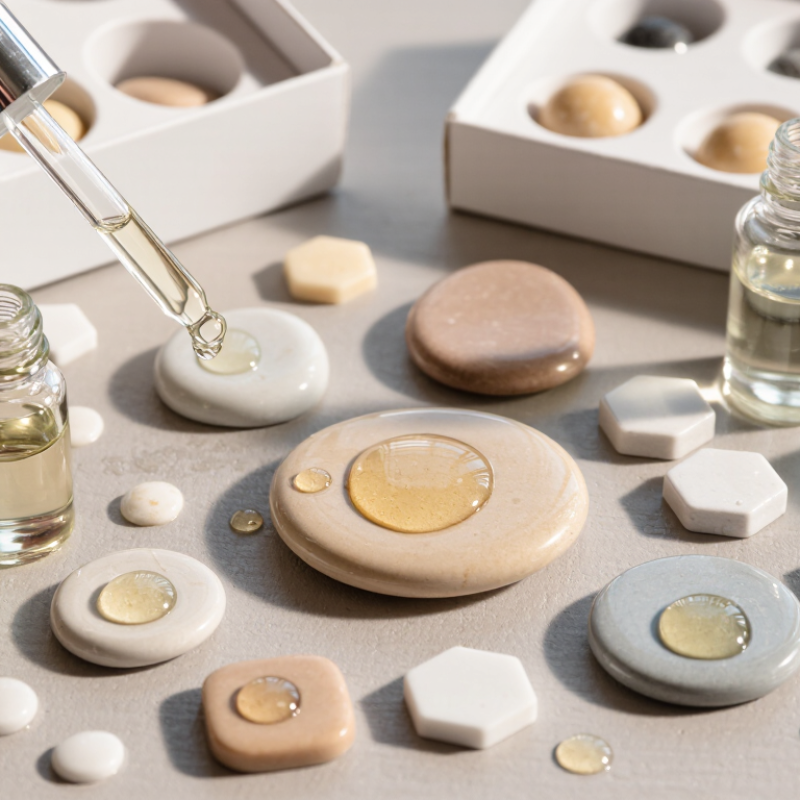
Aroma stones are porous, unglazed pieces made from ceramic, plaster, or mineral-based materials. Their tiny pores absorb fragrance oils and release scent gradually into nearby air. No flame, battery, or water reservoir is required. The process is simple: add a few drops, allow absorption, and place the stone on a dry surface.

The stone does not create fragrance by heating it. Room temperature, airflow, humidity, and stone density control diffusion speed. A rough ceramic surface usually holds oil longer than a heavily sealed one. In practice, a small stone may scent a desk area, while larger pieces suit entryways or bedside spaces. Results vary. This is where many product descriptions become too confident.

Grand View Research estimated the global aromatherapy market at about USD 2.8 billion in 2023, with projected growth through 2030. Allied Market Research also forecasts strong expansion for aromatherapy products during the next decade. These figures indicate demand, but they do not guarantee aroma-stone performance. Wholesale buyers should test absorption time, scent duration, staining, breakage, and packaging before placing large orders. Material consistency matters. Ask for batch samples and basic safety documentation. Fragrance oils may irritate sensitive skin or indoor-air users, so clear usage guidance is important. One overlooked detail is the tray: without it, absorbed oil can mark wood or painted surfaces. That small failure can damage customer trust.

What Are the 2026 Best Aroma Stones for Wholesale Buyers? - What Are Aroma Stones and How Do They Work?

Wholesale Comparison of Common Aroma Stone Types
Aroma Stone Type Typical Material How It Works Approx. Oil Capacity Typical Scent Release Best Wholesale Applications Key Buying Considerations
Porous Ceramic Stone Unglazed ceramic or fired clay Microscopic pores absorb essential oil and release aromatic molecules gradually at room temperature. Approximately 5–15 drops for a small stone About 2–7 days, depending on oil, airflow, and surface area Gift sets, bedside products, desks, drawers, and personal spaces Check porosity, uniform firing, odor neutrality, breakage rate, and surface finish.
Plaster-Based Aroma Stone Gypsum plaster or mineral plaster The porous mineral structure draws in oil through capillary absorption and releases it without heat or electricity. Approximately 3–12 drops for a small to medium piece About 1–5 days under normal indoor conditions Decorative shapes, event favors, seasonal collections, and low-cost gift lines Evaluate edge strength, color consistency, dusting, moisture sensitivity, and packaging protection.
Terracotta Aroma Stone Low-fired unglazed terracotta clay Open clay pores absorb liquid fragrance and allow passive evaporation over time. Approximately 5–20 drops, depending on thickness About 2–8 days, with stronger diffusion in warm, ventilated areas Closet accessories, car décor, plant-themed products, and rustic home collections Review absorption speed, color variation, staining, hanging hardware, and transport durability.
Natural Mineral Stone Naturally porous mineral or volcanic stone Natural pores and surface texture hold fragrance, which is released gradually through passive evaporation. Approximately 3–15 drops, depending on porosity and size About 2–10 days, with considerable variation between stones Premium décor, wellness collections, spa accessories, and natural-product retailers Confirm mineral composition, cleaning method, weight, shape consistency, and responsible sourcing.
Scented Stone Bead Porous ceramic, clay, or compressed mineral material Small porous beads absorb oil and provide a larger exposed surface relative to their size. Approximately 1–5 drops per bead or small bead set About 1–4 days, depending on bead size and airflow Bracelets, necklaces, keychains, hanging ornaments, and travel products Check bead-hole size, cord compatibility, skin-contact safety, surface smoothness, and colorfastness.
Wholesale selection note: Aroma stones are passive fragrance diffusers. They normally require no electricity, flame, water, or heat; essential oil or fragrance oil is absorbed into the porous material and released gradually into the surrounding air. Actual performance varies with oil viscosity, dosage, stone porosity, temperature, humidity, ventilation, and exposed surface area. Always request a sample test before placing a large wholesale order.

Which Aroma Stone Materials and Designs Suit Wholesale Markets?

For 2026 wholesale markets, porous ceramic and gypsum remain practical aroma stone materials. They absorb essential oils steadily and release fragrance without heat. Ceramic offers stronger impact resistance and a cleaner, more premium appearance. Gypsum costs less, but it can chip during transport. That difference matters when cartons travel through several warehouses.

Diatomite is another useful option for buyers seeking quick absorption. Its dry, chalky surface suits minimalist collections and neutral packaging. Natural volcanic stone creates a heavier, more organic impression. However, its pores and color can vary between batches. Wholesale buyers should request samples, absorption tests, weight checks, and packaging trials before placing large orders. Small details prevent expensive returns.

Simple designs usually sell more consistently than complicated shapes. Flat discs, small arches, leaf forms, and compact trays fit bedrooms, offices, and gift sets. Stackable designs also reduce storage space. Soft beige, white, charcoal, and muted green support wider retail displays. Strong color may look attractive online, but it can limit resale flexibility.

A perfectly uniform finish is not always realistic. Natural materials show character. Still, uneven edges or sharp corners suggest weak quality control. I would avoid promising fragrance duration without testing the same oil, dosage, temperature, and room size. Some early estimates may be too optimistic. Reliable suppliers should document material composition, care instructions, sample results, and protective packaging. That evidence helps buyers choose designs that perform beyond a product photograph.

What Are the 2026 Best Aroma Stones for Wholesale Buyers?

Which aroma stone materials and designs suit wholesale markets?

The comparative index combines four practical wholesale factors: fragrance absorption, breakage resistance, production cost potential, and design versatility. Porous ceramic and unglazed terracotta score strongly for fragrance diffusion, while sealed stone and minimalist carved designs offer better durability and presentation consistency. Scores are indicative planning benchmarks rather than brand or company sales data.

How to Compare the Best Aroma Stones for Wholesale Purchasing

Wholesale purchasing requires more than choosing the prettiest aroma stone. Good appearance can hide weak absorption, uneven pores, or fragile edges. I compare each sample by material, weight, surface texture, and scent retention. These details affect customer satisfaction and repeat orders.

Each sample receives the same 0.5 ml fragrance amount. I record the scent after one hour, eight hours, and twenty-four hours. A stone that smells strong initially may fade too quickly. That result matters. I also check whether oil spreads evenly or leaves dark patches. Ceramic, plaster, and porous mineral stones can perform differently, even when their shapes look similar.

Batch consistency is essential for wholesale buyers. Natural color variation may be acceptable, but large differences can weaken product presentation. Request production samples, material details, packaging dimensions, and quality inspection records. During supplier reviews, I inspect cracks, sharp edges, dust, and loose particles. Small defects become expensive after thousands of units. Packaging deserves attention too. Individual sleeves or protective inserts can reduce breakage during shipping. The lowest quote is rarely the safest choice. A slightly higher unit cost may reduce returns and replacement requests. Still, my judgment is not perfect. A two-week test may reveal fading, staining, or packaging problems that a quick inspection misses. Use a scorecard for performance, appearance, safety, packaging, lead time, and total landed cost.

What Quality, Safety, and Customization Standards Should Buyers Check?

For wholesale buyers, the best aroma stones must pass more than a visual inspection. Grand View Research estimates the global aromatherapy market reached about USD 2.17 billion in 2023, with strong growth expected through 2030. This expansion increases pressure on suppliers to prove consistency, not simply offer attractive shapes.

Check the stone’s material composition, density, and absorption rate. A practical sample test uses the same oil volume on ten stones, then measures fragrance release over several hours. Results should remain reasonably consistent. Inspect for cracks, powdery surfaces, sharp edges, and uneven pores. A perfect white surface proves nothing. Ask for heavy-metal screening and migration testing when pigments or coatings are used. ISO 9001-style batch records can also reveal whether production is controlled. Small details matter.

Safety documents should include material declarations, care instructions, and a current safety data sheet for any supplied fragrance. IFRA Standards are useful when fragrance compounds are included, although they do not certify the stone itself. Packaging should protect against moisture and breakage. Customization may include shape, color, engraving, scent-free options, and retail-ready cartons. Confirm tolerances in writing, especially for dimensions and logo placement. My own buying rule is simple: request pre-production samples and repeat testing after mass production. It costs more. It prevents disappointing surprises. Some suppliers still provide impressive samples, then weaker bulk goods. That risk deserves attention.

How to Evaluate Suppliers, Pricing, and Order Requirements?

For 2026 wholesale buying, aroma stone selection starts with repeatable quality, not appearance alone. In sample checks, I look for even pores, stable weight, smooth edges, and consistent fragrance absorption. A useful test places the same fragrance volume on three stones. Record scent strength after 2, 24, and 72 hours. Results should be comparable. They rarely are perfect. That variation deserves discussion, not hiding.

Supplier evaluation should combine documents with physical evidence. Request material specifications, batch records, packaging details, and safety documents for coatings or fragrances. Check whether the factory can repeat the sample’s color and dimensions. A video call can reveal dusty worktables, weak carton protection, or manual counting. Ask about defect handling. One overlooked question is replacement policy for chipped pieces. Also confirm destination-market labeling and documentation requirements before production begins.

Compare landed cost, not unit price. Separate stone, fragrance, inner box, carton, tooling, inspection, and freight charges. Ask for quotes at 500, 2,000, and 5,000 units. Confirm the minimum order quantity for each color and shape. Clarify lead time, reorder timing, payment milestones, and carton dimensions. A low minimum order may carry higher packing costs. My early mistake was accepting flexible quantities without fixing inspection standards. The order moved quickly, but sorting took days. Require a pre-production sample and written tolerances for size, weight, color, and breakage.