Choosing China’s best empty perfume bottle wholesale suppliers takes more than comparing unit prices. Buyers need bottles that look refined, fit filling equipment, and arrive with consistent quality. Empty Perfume Bottles may be made from glass or other materials, with differences in weight, clarity, shape, and closure fit. A sample tells you what a catalogue cannot.
Packaging specialist Maya Chen puts the sourcing challenge this way: “A good perfume bottle must balance shelf appeal, reliable production, and a closure that fits every time.” Treat that as a practical test, not a promise. Ask suppliers about material options, minimum order quantities, customization, sample costs, production timelines, and inspection procedures. Check the neck finish and cap fit by hand. Look closely for scratches, bubbles, uneven color, or rough edges. Small flaws matter.
China offers a broad range of bottle styles, from clear cylindrical designs to heavier, decorative glass forms. Still, a polished product photo proves little. Request physical samples and compare them under ordinary lighting. Confirm specifications in writing before approving a bulk order. It can take extra time. But rushing this step may create avoidable delays or costly rework. Supplier selection is rarely perfect on the first try; clear questions and careful checks make the decision more dependable.
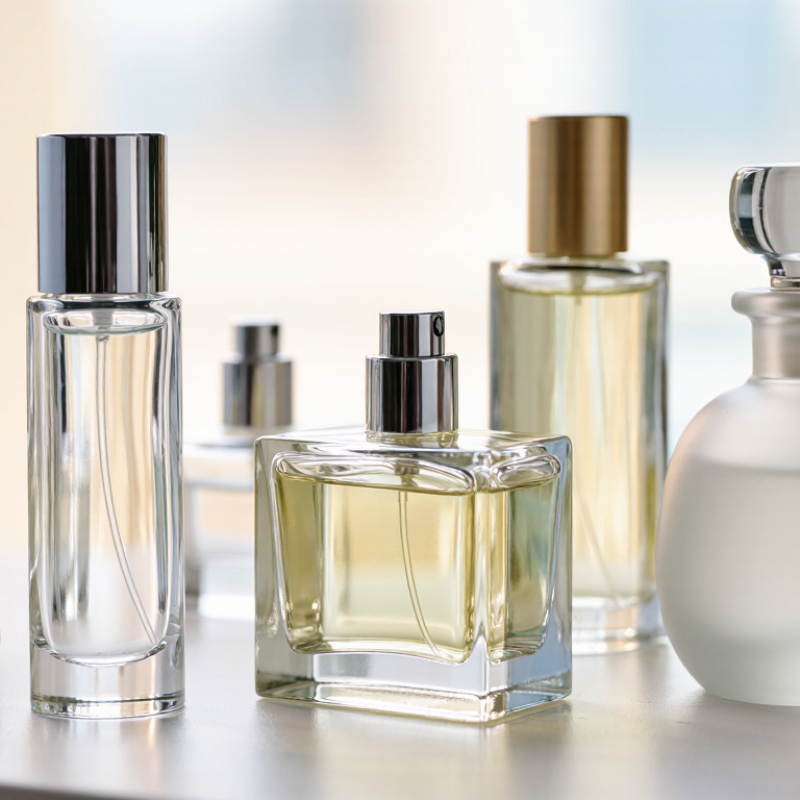
An empty perfume bottle is a container prepared for filling, sampling, or packaging development. It commonly includes a glass vessel, spray pump, collar, and cap. The pump draws liquid through a dip tube and releases it as a fine mist. Glass offers clarity and a substantial feel, but the pump and bottle neck must fit correctly. A bottle can look elegant yet work poorly in daily use. Small leaks matter.
Industry context helps explain the packaging demand. Grand View Research estimated the global perfume market at USD 50.45 billion in 2022, with a projected 5.9% compound annual growth rate from 2023 to 2030. This figure describes the perfume market, not empty-bottle sales. It signals category scale, but does not predict demand for any specific bottle. Wholesale buyers should check capacity, neck dimensions, spray performance, and protective packing. Requesting samples allows practical testing before a larger order.
Tips: Test the bottle with the intended formula. Check for leaks, uneven mist, and loose caps. Small details matter. Record sample results; a quick visual check alone may miss problems.
Chinese suppliers offer several empty perfume bottle types, each suited to a different dispensing style. Fine-mist spray bottles are common for daily-use fragrances and typically pair a glass body with a pump and cap. Splash bottles have a simpler opening, while roll-on designs use a small rolling applicator. Miniature bottles can support sampling or travel-size product lines. Small details matter.
Bottle bodies are available in clear, frosted, amber, and colored glass, with cylindrical, square, or rounded profiles. Neck finishes and capacities vary, so confirm pump compatibility before ordering.
Grand View Research estimated the global perfume market at USD 50.46 billion in 2022 and projected a 5.9% compound annual growth rate from 2023 to 2030. This market estimate signals broad commercial activity, but it does not predict demand for any particular bottle format.
For wholesale evaluation, request samples and check the bottle’s weight, base stability, spray pattern, and cap fit. A few test sprays can reveal leakage or uneven mist that catalog images cannot show. One limitation remains: appearance alone says little about production consistency. Confirm material specifications, decoration options, minimum order quantities, and lead times in writing before approving a bulk order.
China Best Empty Perfume Bottles Wholesale Suppliers
When evaluating Chinese wholesale perfume bottle suppliers, look beyond polished product photos. Ask for current specifications covering capacity, glass thickness, neck finish, weight, and closure compatibility. A 50 ml bottle should arrive with dimensions that match its drawing, not just its listing. Request samples from the same production process planned for your order. Check for chips, uneven color, loose caps, and leakage after repeated handling. Small details matter.
Tips: Ask how the supplier controls defects and records batch checks. Compare sample quality with the written specifications. Confirm minimum order quantities, lead times, packaging methods, and replacement terms before paying a deposit. Clear answers are useful; vague promises are not. Also request photos of packed cartons and confirm how bottles are protected between layers.
A responsive sales contact helps, but communication alone cannot establish manufacturing quality. Ask whether the supplier produces bottles directly or coordinates production through another facility. Then verify that sample and bulk-order details appear in the quotation. No checklist catches everything. A sample may look excellent while later batches vary slightly in color or fit. That is worth discussing upfront. Keep approvals, drawings, and agreed tolerances in writing, and allow time for a pre-shipment inspection when order size justifies it.
| Evaluation Dimension | Weight | What to Evaluate | Evidence to Request or Check | Score (1–5) |
|---|---|---|---|---|
| Product and specification fit | 18% | Confirm bottle material, capacity, dimensions, neck finish, color, shape, and compatibility with the intended pump, sprayer, or cap. | Dimensioned drawings, written specifications, material details, and samples of the selected bottle and closure. | — |
| Quality control | 18% | Check how incoming materials, production, and finished bottles are inspected. Ask how defects, corrective actions, and batch traceability are handled. | Quality-control procedures, inspection records, defect classifications, and a sample inspection report. Confirm acceptance criteria before production. | — |
| Samples and compatibility testing | 10% | Assess whether samples match the agreed specifications and work with the intended fragrance, pump, and decoration. | Pre-production samples; fit and function checks; and, where appropriate, leak, spray, or compatibility testing using the intended components and contents. | — |
| Customization and decoration | 12% | Evaluate available options such as color, coating, printing, labeling, frosting, and shape customization, including setup requirements and limitations. | Decoration samples, artwork requirements, color approval process, tooling details, and written confirmation of the approved production sample. | — |
| Production capacity and lead time | 12% | Check whether the supplier can meet the requested order quantity and schedule, including sampling, production, and peak-period planning. | A written schedule with production milestones, stated capacity for the relevant item, and a process for communicating delays. Confirm timing for the specific order. | — |
| MOQ, pricing, and cost transparency | 10% | Compare minimum order quantities, unit prices at relevant volumes, sample and tooling charges, decoration costs, and payment terms. | An itemized quotation specifying product configuration, quantity, packaging, currency, payment terms, quotation validity, and any additional charges. | — |
| Packaging and shipping readiness | 8% | Review protective packing for fragile bottles and clarify carton details, shipping marks, and responsibility for transport arrangements. | Packing specifications, carton dimensions and gross weight, photographs or samples of packed goods, and a written shipping plan for the destination. | — |
| Documentation and destination requirements | 6% | Determine which product, material, labeling, and import requirements apply to the destination and intended use. Requirements vary by market and product configuration. | Relevant product and material documentation, test reports where applicable, and confirmation that documents correspond to the quoted item. Verify destination requirements independently. | — |
| Communication and order management | 6% | Assess response clarity, specification confirmation, change control, complaint handling, and the reliability of order updates. | Written answers to technical questions, a named order contact, documented approval steps, and clear procedures for changes or quality claims. | — |
| Total weight | 100% | Score each dimension from 1 (poor or insufficient evidence) to 5 (strong evidence and clear fit). Calculate the weighted result by multiplying each score by its weight and adding the results. | ||
When comparing empty perfume bottle suppliers, inspect the glass and the finished details, not just the product photos. Check for uneven walls, rough edges, and chips around the neck. A bottle should sit flat on a table, and its cap should fit without wobbling. Ask for samples from the same production method you plan to order. Even so, one polished sample cannot prove every batch will match. Test several units.
Customization affects both appearance and production consistency. Confirm the bottle’s capacity, color, surface finish, and decoration before approving a sample. Share clear drawings or dimensions, especially for the neck and closure; small mismatches can cause leaks or loose caps. Ask which changes require new tooling and how many units are needed for a custom run. A printed logo may look crisp on a sample but vary slightly across a large order. That detail deserves a frank discussion.
Compare prices using identical specifications. A low quote may exclude caps, decoration, protective packaging, or freight, so request an itemized breakdown. Check the stated tolerance for dimensions and color, plus the supplier’s process for handling defective units. Lead time matters, too: custom finishes can add production steps. I would leave room in the budget for breakage and repeat testing. It is easy to overlook those costs.
Start with a written specification: bottle capacity, glass color, neck finish, closure type, decoration, and target order quantity. Send a simple drawing or reference sample to shortlisted suppliers. Ask for material details, minimum order quantity, production lead time, and packing method in one quote. Small details matter. A cap that looks correct may not fit the bottle neck securely.
Request samples before approving production. Check each bottle for chips, bubbles, uneven color, and a stable base. Fit the pump and cap, then test several sprays with water to assess leakage and operation. Ask how the supplier checks dimensions and defects during production, and request dated inspection records or sample photos. Real-world samples can still disappoint. Keep an approved reference sample for comparison.
Market context can help frame planning, but it cannot replace supplier checks. Grand View Research valued the global perfume market at USD 50.46 billion in 2022 and projected a 5.9% compound annual growth rate from 2023 to 2030. This signals a sizable category, not guaranteed demand for any bottle design. Confirm payment milestones, export packing, and delivery terms in writing. Compare landed cost, including freight and protective packaging, rather than choosing by unit price alone. One step is easy to overlook: verify that production samples match the final quoted specification.