How to Choose the Best Candle Jar for Wholesale?
Choosing the best Candle Jar for wholesale requires more than comparing color, shape, and unit price. The container affects safety, freight cost, shelf appeal, filling efficiency, and customer perception. A beautiful jar can still fail if its glass becomes too hot, its lid fits poorly, or its base breaks during transport.
Market evidence shows why this decision deserves careful analysis. Grand View Research valued the global candle market at approximately USD 12.88 billion in 2022 and projected a 5.7% compound annual growth rate from 2023 to 2030. The National Candle Association also identifies fragrance, appearance, and burning experience as important consumer considerations. These findings support a practical conclusion: wholesale buyers need jars that protect the product while supporting a consistent brand experience.
A reliable evaluation should examine glass thickness, thermal resistance, internal volume, neck dimensions, closure quality, and carton protection. ASTM F2417 provides relevant guidance for candle fire safety, while regional requirements may also apply. Buyers should request test samples and assess burning performance with the intended wax, wick, fragrance load, and fill level. Small details matter. A lid that slides during delivery can damage presentation. A heavy base may improve stability, yet it can increase shipping expenses and material use.
The perfect jar does not exist. That is worth remembering. Many purchasing teams focus too heavily on appearance and overlook production tolerances. A better process compares landed cost, defect rates, breakage risk, and repeat-order consistency. This guide explains how to balance these factors and select a Candle Jar that performs reliably at wholesale scale.
Understanding Candle Jar Types and Their Wholesale Uses
How to Choose the Best Candle Jar for Wholesale?
Understanding Candle Jar Types and Their Wholesale Uses
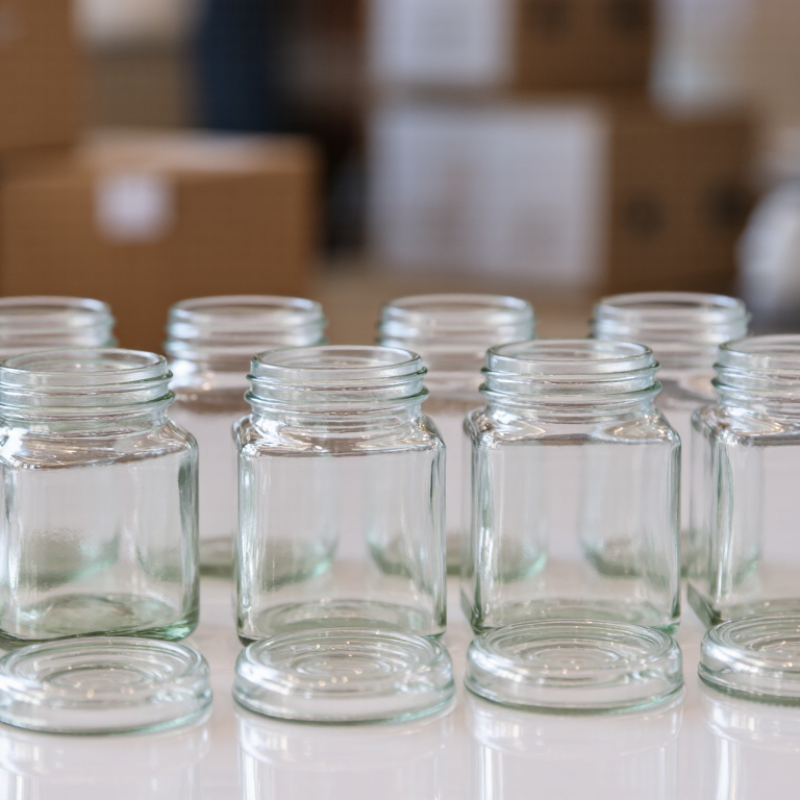
Choosing a wholesale candle jar starts with understanding its material and intended market. Glass jars offer clear product visibility and suit everyday collections, gift sets, and premium fragrances. Amber or frosted glass can create a softer appearance, but surface finishes may raise production costs. Tin containers are lightweight, stackable, and practical for shipping. They work well for travel candles and promotional ranges. Ceramic jars feel substantial and decorative, although their weight and breakage risk require stronger packaging.
Tips: Request samples before placing a large order. Test each jar with your planned wax, wick, fragrance load, and burn time. Check the inner diameter, wall thickness, lid fit, and heat resistance. Small differences can affect burning performance. A jar may look premium but still produce uneven heat. That mistake is expensive.
Wholesale decisions also depend on packing efficiency and consistent supply. Choose sizes that fit standard cartons with minimal empty space. Confirm the supplier’s quality inspection process, production lead time, minimum order quantity, and replacement policy. Transparent glass shows wax color clearly, while darker materials can hide surface imperfections. That may influence customer expectations. I would not select a jar from photographs alone. Lighting can hide scratches, uneven rims, or loose lids. Review physical samples and record test results before approval. A cheaper container is not always the better value. Reliable performance protects customer trust and reduces avoidable returns.
Evaluating Jar Materials, Durability, and Heat Resistance
For wholesale candle orders, jar material affects safety, breakage, and customer trust. Soda-lime glass is common and cost-efficient, but it needs controlled wall thickness and proper annealing. ASTM F2179 covers annealed glass containers designed for candle use. Do not treat ordinary food jars as equivalent. They may crack when heat concentrates near the wax line.
Heat resistance deserves practical testing. Fill samples with the intended wax, wick, fragrance load, and dye. Burn them through repeated cycles, then inspect the base, rim, and sidewall. A jar can appear perfect after one burn. It may fail after several. ASTM F2417 addresses candle fire safety, while NFPA’s Home Candle Fires report recorded about 7,400 residential candle fires annually from 2014 to 2018. That figure makes durability more than a packaging concern. It becomes a purchasing responsibility. I would also test cold-to-hot transitions, because warehouse storage and delivery can create temperature stress. Thicker glass is not always safer; uneven thickness can still produce weak points.
Tips: Request material specifications, heat-test records, and dimensional tolerances from suppliers. Check the jar’s inner diameter before selecting a wick. Leave enough headspace for a stable flame. Reject samples with tiny chips, cloudy areas, or sharp rims. Consider controlled drop testing, but do not mistake drop resistance for heat resistance. In practice, I would keep a small failure log. It may reveal patterns that a polished supplier presentation hides.
This comparison uses typical material-property values for common wholesale candle containers. Ceramic firing temperature indicates manufacturing heat tolerance, while glass softening temperature and tin melting point indicate thermal limits. Thermal conductivity affects how quickly heat moves through the jar, and density helps estimate handling weight. Actual candle performance also depends on wall thickness, glazing, vessel design, wick size, and thermal-shock testing.
Matching Jar Size, Shape, and Capacity to Candle Products
Choosing a candle jar for wholesale starts with the product’s finished weight, burn time, and customer use. The National Candle Association reports that container candles represent about 60% of candle sales. That makes jar selection commercially important. A 6–8 ounce jar suits trial sizes and gift sets. A 10–12 ounce jar often supports longer burns and stronger shelf presence. Do not judge capacity by appearance alone. Wax density, fragrance load, and wick placement change the final fill weight.
Shape affects both performance and packing efficiency. Straight-sided jars simplify labeling, filling, and carton design. Wide jars expose more wax surface, which may improve scent release but require careful wick testing. Tall, narrow jars can create uneven melt pools if the wick is undersized. The 2024 Fortune Business Insights report valued the global candle market at approximately USD 12.88 billion in 2023. Wholesale buyers therefore need repeatable specifications, not attractive samples alone.
I recommend testing three filled units from every proposed size. Measure burn time, jar temperature, soot, and melt-pool width. Leave practical headspace for transport and lid placement. A jar that holds 12 ounces of water may hold less wax. I learned this through an avoidable sampling mistake. Capacity claims should be based on actual wax weight. Also check pallet dimensions, breakage rates, and carton fit before placing a large order. Small shape differences can create expensive shipping waste.
Comparing Customization, Packaging, and Supplier Options
When buying candle jars wholesale, customization should serve the product, not only the photograph. A standard 8-ounce vessel may offer safer restocking than an unusual shape. Ask for wall thickness, heat-resistance data, lid fit, and wax compatibility before approving artwork. I once chose a beautiful narrow jar, but its small opening made pouring and cleaning difficult. That mistake delayed filling.
Packaging deserves equal attention. A jar can survive production yet arrive chipped after transport. Request a sample packed like a real shipment, with dividers, corner protection, and a labeled outer carton. Check whether the insert keeps lids from rubbing against glass. A simple drop test can reveal weak points, although it cannot replace proper transit testing. Custom cartons improve shelf presentation, but excessive printing may increase minimum order quantities and waste.
Supplier selection is about evidence, not confident promises. Compare sample quality, communication speed, production capacity, inspection records, and replacement policies. Confirm color consistency across batches, especially for frosted or tinted glass. Request a written schedule with sampling, production, and shipping milestones. My supplier checklist still misses details sometimes. For example, I once forgot to ask about spare lids, which created avoidable packing work. A reliable partner will explain limitations clearly and suggest practical alternatives when a custom request becomes risky or expensive.
Calculating Wholesale Costs, Order Quantities, and Profit Margins
How to Choose the Best Candle Jar for Wholesale?
Wholesale jar selection should begin with landed cost, not appearance. Grand View Research valued the global candle market at about $12.88 billion in 2022. Its report also projects approximately 5.7% annual growth through 2030. This growth creates opportunity, but price pressure remains real. Compare glass thickness, lid fit, carton size, and breakage history before approving a supplier.
Use this formula: landed jar cost equals unit price, freight, duties, and inspection costs divided by sellable units. For example, 2,400 jars at $0.78 cost $1,872. Add $420 freight, and the landed cost becomes $0.96 per usable jar. If three percent arrive damaged, the effective cost rises to about $0.99. Small details matter. A lower unit price can still lose money. My first wholesale estimate ignored damaged stock. That was optimistic.
Calculate order quantity from expected sales, storage space, and cash flow. A 2,400-unit order may reduce costs, but slow-moving inventory ties up capital. Suppose one finished candle costs $3.40, including the jar, wax, labor, label, and freight. A wholesale price of $8.50 creates a gross margin near 60%. Exclude discounts, samples, payment fees, and returns, and the margin looks stronger than reality. Fortune Business Insights forecasts the candle market could reach about $20.15 billion by 2030. Demand may grow, but each jar still needs evidence. Test a smaller order, record breakage, and revise the spreadsheet before scaling.
How to Choose the Best Candle Jar for Wholesale? - Calculating Wholesale Costs, Order Quantities, and Profit Margins
| Jar Type |
Nominal Capacity |
Approx. Jar Size |
Jar Cost / Unit |
Packaging / Unit |
Freight & Handling / Unit |
Landed Cost / Unit |
Recommended MOQ |
Wholesale Price / Unit |
Gross Profit / Unit |
Gross Margin |
MOQ Revenue |
MOQ Gross Profit |
| Clear Glass Jar |
6 oz / 177 ml |
Approx. 76 × 76 mm |
$1.18 |
$0.22 |
$0.28 |
$1.68 |
500 units |
$3.25 |
$1.57 |
48.3% |
$1,625 |
$785 |
| Amber Glass Jar |
8 oz / 237 ml |
Approx. 82 × 82 mm |
$1.42 |
$0.24 |
$0.31 |
$1.97 |
400 units |
$3.85 |
$1.88 |
48.8% |
$1,540 |
$752 |
| Ceramic Jar |
8 oz / 237 ml |
Approx. 84 × 84 mm |
$2.35 |
$0.35 |
$0.42 |
$3.12 |
300 units |
$5.95 |
$2.83 |
47.6% |
$1,785 |
$849 |
| Metal Tin |
6 oz / 177 ml |
Approx. 75 × 52 mm |
$0.78 |
$0.16 |
$0.19 |
$1.13 |
500 units |
$2.45 |
$1.32 |
53.9% |
$1,225 |
$660 |
| Frosted Glass Jar |
10 oz / 296 ml |
Approx. 88 × 88 mm |
$1.68 |
$0.28 |
$0.36 |
$2.32 |
300 units |
$4.65 |
$2.33 |
50.1% |
$1,395 |
$699 |
Planning assumptions: Estimated USD costs include the jar, standard protective packaging, and allocated freight and handling. Wholesale price is calculated before sales tax, marketplace fees, warehousing, marketing, and customer-specific customization.
Formulas: Landed Cost = Jar Cost + Packaging + Freight & Handling; Gross Profit = Wholesale Price − Landed Cost; Gross Margin = Gross Profit ÷ Wholesale Price.