
Leave Your Message
China has become a major sourcing base for Rattan Sticks For Diffuser, serving fragrance brands, hospitality suppliers, and private-label manufacturers worldwide. Its advantage is not simply low cost. It also includes broad rattan access, skilled processing, flexible order volumes, and established export experience.
This guide introduces ten Chinese manufacturers worth evaluating. Each company should be examined through practical details. Look at rattan species, reed diameter, drying methods, cutting accuracy, packaging, and fragrance absorption. A reed may look smooth in a photograph yet perform poorly after several days in oil. That difference matters.
“Consistent reed structure matters more than attractive packaging,” says Elena Marlow, a fragrance-materials consultant with experience in home-scent product development. “The best diffuser stick releases fragrance steadily without becoming brittle or oversaturated.”
Performance is never guaranteed by a factory profile alone. Samples are essential. Ask for untreated and treated options. Compare color stability, capillary movement, scent diffusion, and breakage during transport. Moisture control deserves close attention, especially in humid production regions.
Some manufacturers may offer impressive customization. Others may provide better consistency at scale. These strengths are not always found together. That is worth remembering.
The ranking in this article considers product quality, manufacturing capability, customization, communication, packaging support, and buyer feedback. Evidence can change over time, and supplier information may remain incomplete. Therefore, readers should verify certifications, production details, and sample results before placing an order. A careful comparison can reduce waste and support a more dependable diffuser program.
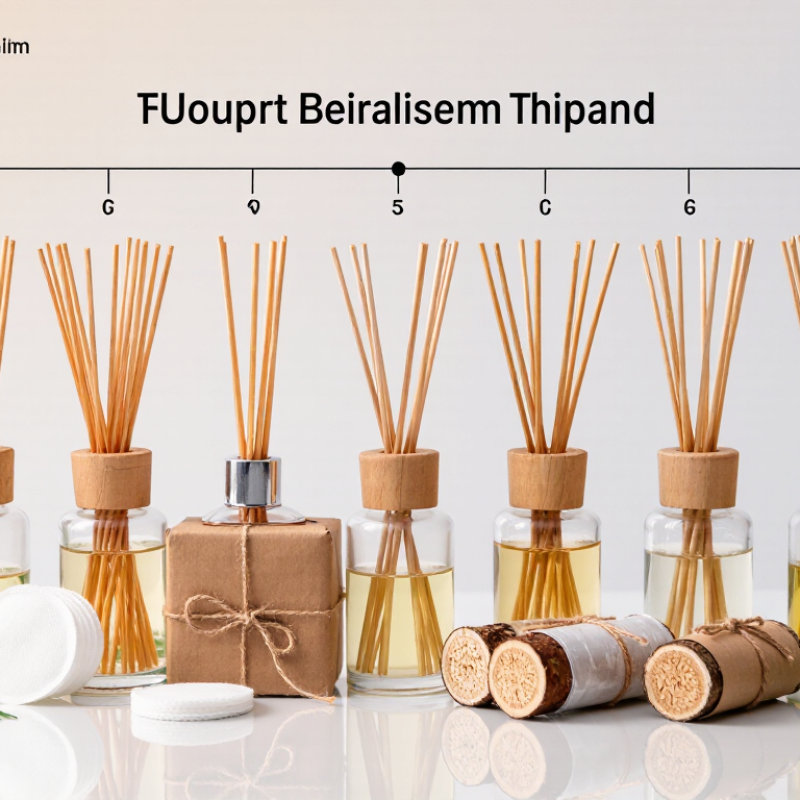
China Top 10 Rattan Sticks for Diffuser Manufacturers
Rattan diffuser sticks rely on porous structure and capillary wicking to move fragrance upward. Most practical cores measure between 3 and 5 mm. A 3 mm core usually offers controlled absorption and a lighter scent release. A 5 mm core holds more liquid and can produce stronger diffusion. However, larger does not always mean better. Fiber density, straightness, moisture content, and surface preparation also influence performance. In factory evaluations, uneven pores can create slow or inconsistent wicking. That detail is easy to overlook.
Tips: Test sticks in the actual fragrance formula, not only in water. Record liquid rise after one, four, and twenty-four hours. Compare scent output, oil consumption, and wetting speed. Keep storage dry and sealed. Damp rattan may lose performance before production begins. Lightly flipping the sticks can refresh diffusion, but frequent flipping may increase consumption. Use caution when making assumptions from a single test.
Reliable manufacturers should inspect diameter, length, color, and fiber uniformity. They should also check for splitting, odor, dust, and mold marks. A clean cut improves handling, but it may not improve wicking by itself. Some suppliers promise fast diffusion without explaining the core structure. That claim deserves testing. My own assessment is that balanced porosity matters more than appearance. A beautifully straight stick can still diffuse poorly. Small variations are normal, so quality control should define acceptable limits instead of chasing perfection.
| Rank | Anonymous Manufacturer Profile | Typical Rattan Type | Core Diameter | Standard Lengths | Surface Treatment | Capillary Wicking Performance | Moisture Specification | Typical MOQ | Typical Production Lead Time | Common Packaging Options |
|---|---|---|---|---|---|---|---|---|---|---|
| 1 | Manufacturer Profile 01 | Natural peeled rattan | 3.0–5.0 mm | 20, 25, 30 cm | Cleaned, air-dried, untreated | High; consistent pore structure supports steady fragrance diffusion | ≤12% moisture | 10,000 sets | 15–20 working days | Bulk cartons, paper bundles, custom inner boxes |
| 2 | Manufacturer Profile 02 | Selected natural rattan | 3.0–4.5 mm | 20, 25, 28 cm | Polished and dust removed | High; suitable for reed diffuser refill systems | ≤13% moisture | 8,000 sets | 18–22 working days | Paper sleeves, kraft cartons, polybag-free bundles |
| 3 | Manufacturer Profile 03 | Light-colored peeled rattan | 3.5–5.0 mm | 25, 30, 35 cm | Natural finish with end trimming | Medium-high; balanced uptake and evaporation | ≤12% moisture | 15,000 sets | 20–25 working days | Corrugated export cartons and paper labels |
| 4 | Manufacturer Profile 04 | Fine-grade rattan | 3.0–4.0 mm | 20, 23, 25 cm | Smoothed, screened, untreated | High; narrow diameter provides controlled fragrance release | ≤14% moisture | 5,000 sets | 12–18 working days | Small retail boxes, bundled sticks, master cartons |
| 5 | Manufacturer Profile 05 | Natural rattan with uniform nodes removed | 4.0–5.0 mm | 25, 30, 40 cm | Trimmed and visually graded | Medium-high; larger core supports higher liquid uptake | ≤13% moisture | 10,000 sets | 18–25 working days | Bulk cartons, tissue wraps, recyclable sleeves |
| 6 | Manufacturer Profile 06 | Sun-dried natural rattan | 3.5–4.5 mm | 20, 25, 30 cm | Air-dried with manual surface cleaning | Medium-high; performance varies slightly by fiber density | ≤15% moisture | 20,000 sets | 20–28 working days | Standard cartons and moisture-resistant liners |
| 7 | Manufacturer Profile 07 | Light natural rattan | 3.0–5.0 mm | 18, 20, 25 cm | Cut, screened, and untreated | Medium; appropriate for compact diffuser vessels | ≤14% moisture | 5,000 sets | 15–20 working days | Paper bands, kraft boxes, bulk export cartons |
| 8 | Manufacturer Profile 08 | Thick-core natural rattan | 4.0–5.0 mm | 25, 30, 35 cm | Polished ends and natural body | High initial uptake; suitable for larger fragrance containers | ≤12% moisture | 12,000 sets | 22–30 working days | Individual paper sleeves and reinforced cartons |
| 9 | Manufacturer Profile 09 | Mixed-grade peeled rattan | 3.0–4.5 mm | 20, 25, 30 cm | Basic cleaning and length sorting | Medium; economical option for standard diffuser sets | ≤15% moisture | 20,000 sets | 20–30 working days | Bulk bundles and plain export cartons |
| 10 | Manufacturer Profile 10 | Natural rattan for private-label sets | 3.0–5.0 mm | 20, 25, 30, 35 cm | Trimmed, dried, and quality inspected | Medium-high; adaptable to different fragrance oil viscosities | ≤14% moisture | 8,000 sets | 18–25 working days | Custom paper packaging and bulk cartons |