For wholesale buyers, Empty Perfume Bottles are not merely containers. They shape shelf appeal, filling efficiency, shipping costs, and a fragrance brand’s first impression. The market backdrop is expanding: Grand View Research valued the global perfume market at USD 50.85 billion in 2022 and forecast 5.9% compound annual growth from 2023 to 2030. That figure describes perfume, not empty bottles. It signals demand context, not a bottle-market estimate.
Details matter. A 30 ml glass bottle may suit discovery sets, while a heavier 100 ml flacon can make a premium line feel substantial. Yet extra glass adds freight weight and breakage risk. Check neck finish, sprayer fit, cap stability, and carton protection before approving a bulk order. Ask for samples. Test them on a filling line, not just under showroom lights. Small defects show up quickly.
Industrial designer Dieter Rams wrote, “Good design is as little design as possible.” His principle is useful here: decoration should not compromise handling or function. For 2026, this guide compares wholesale-ready bottle styles by material, capacity, closure, customization, and order practicality. It also considers refill-friendly formats and clearer supplier specifications, while avoiding claims that one design suits every brand. A plain bottle can be the right choice. Sometimes it is not. Check current samples and written specifications before committing, because catalog images rarely reveal every production detail.
2026 Top Empty Perfume Bottles for Wholesale Buyers
What Empty Perfume Bottles Are and How Wholesale Buyers Use Them
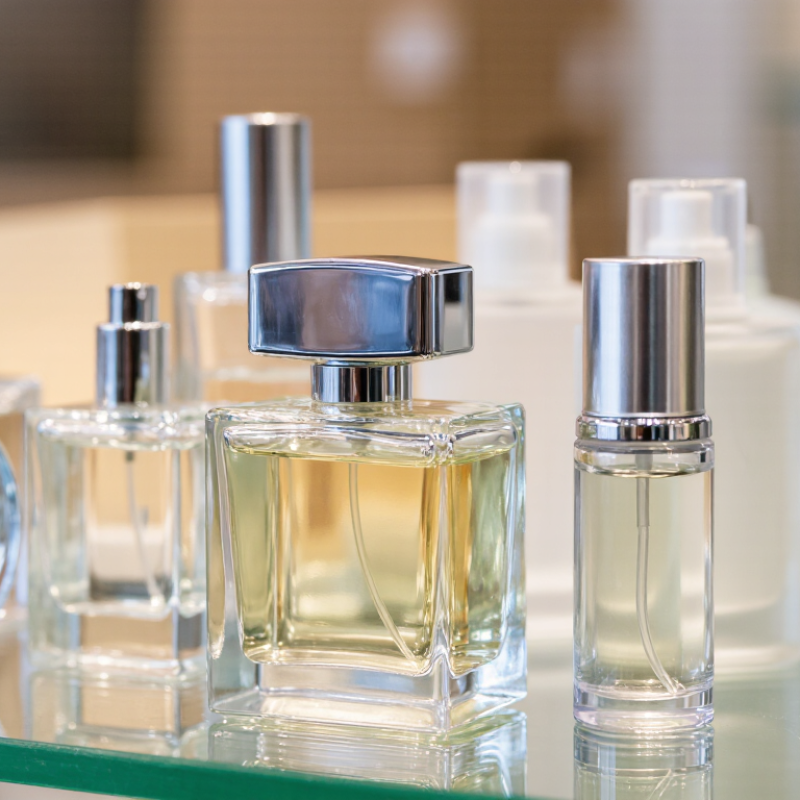
Empty perfume bottles are packaging components sold without fragrance. Wholesale buyers fill them, pair them with pumps and caps, or supply them to fragrance makers and private-label businesses. Common options include clear or colored glass, travel-size formats, and different neck finishes. A bottle is not just decoration. Its weight, spray performance, seal, and compatibility with filling equipment affect handling and customer experience.
The global perfume market was valued at about USD 50.46 billion in 2023, according to Fortune Business Insights’ perfume market report. That figure describes the fragrance market, not empty-bottle sales, but it signals a sizable category for packaging buyers. Before ordering in bulk, request samples and test them with the intended pump and liquid. Check spray consistency, leakage, bottle dimensions, and carton protection. A sample may look perfect on a desk, yet perform differently on a filling line.
Tips: Ask suppliers for specifications, sample quantities, and packing details. Test several units, not just one. Small differences matter. Keep a record of bottle weight and neck measurements, and confirm the approved sample matches the production order. Don’t assume a heavier bottle automatically feels better; shipping costs and breakage deserve attention too.

What empty perfume bottles are and how wholesale buyers use them
Empty perfume bottles are unfilled containers sold for perfume packaging, sampling, travel, or retail. These common capacity formats illustrate typical use cases; available sizes and specifications vary by supplier.
Wholesale buyers should match bottle materials to the formula, dispensing method, and expected use. Glass is a dependable choice for many alcohol-based perfumes, and its weight can make a bottle feel substantial in the hand. Clear glass shows the fragrance color, while amber or coated glass helps limit light exposure. Thick walls look refined, but they add shipping weight and cost. Small details matter.
For body mists and everyday sprays, lightweight PET can reduce breakage during transit. Check that the plastic, pump, and gasket are compatible with the formula; oils and aromatic ingredients may behave differently across materials. Roll-on bottles need a well-fitted roller insert, while fine fragrance benefits from a smooth, even atomizer. Decorative caps are attractive, but they should not interfere with closing or packing the bottle.
Tips: Request samples and test them with the actual formula. Check for leaks after storage, and compare spray consistency across several pumps. Ask suppliers for material specifications and closure options. There is no perfect design for every product; a beautiful bottle that ships poorly is still a poor choice. I’d also test labels on curved surfaces before ordering in bulk, since small alignment issues can become obvious across a full carton.
Wholesale perfume bottles should be compared by usable capacity, not appearance alone. A 50 ml bottle may suit a standard retail set, while smaller formats can reduce shipping weight and support sampling. Check the fill line against the bottle’s total volume; the difference affects both filling accuracy and customer expectations. Test the fill. A clear glass sample also makes liquid color easy to inspect, but heavier glass can raise freight costs. Ask suppliers for drawings, neck dimensions, and packed-bottle weights before confirming an order.
Closures need a secure fit and a spray pattern that stays consistent across repeated presses. Compare crimp, screw, or snap-on options with the filling equipment you plan to use. Decoration choices, such as screen printing, hot stamping, or colored coatings, can change lead time and minimum order quantities. Request samples to check lettering, surface feel, and color under ordinary lighting. A sample can still surprise you. Packaging deserves the same practical review: dividers should prevent glass-to-glass contact, and cartons should tolerate routine handling. Run a small drop test with the intended outer box; decorative bottles are lovely, but damaged corners make for an awkward delivery.
A wholesale order can look consistent in a catalog yet vary in hand. Request samples from the same production specification you plan to purchase. Measure bottle height, base diameter, neck finish, and usable fill volume; small differences can affect labeling and filling equipment. Check glass for bubbles, chips, uneven seams, and a base that rocks on a flat surface. Small details matter.
Compatibility goes beyond whether a cap appears to fit. Confirm the neck dimensions and closure liner, then test the assembled bottle for leakage in several positions. Try the intended pump or sprayer with the actual liquid formula, since viscosity can change the dose and spray pattern. Record how many presses are needed to prime it. A quick desk test may miss problems that emerge after repeated use.
Ask suppliers for written material and dimensional specifications, plus clear tolerances for production. Compare those details with your filling line, packaging inserts, and transport cartons. Run a small pilot batch before committing to a large order, and inspect bottles from different cartons. Test before scaling. It is tempting to approve a sample after one good test, but that is not enough. Keep a few filled units for follow-up checks; an extra review takes time, yet can reveal slow seepage or loose closures.
| Check Area | Common Options or Reference Points | What to Verify Before Ordering | Practical Acceptance Check |
|---|---|---|---|
| Nominal capacity | Common retail formats include 30 mL, 50 mL, and 100 mL; travel-size formats are also available. | Confirm nominal capacity, brimful capacity, and the supplier’s stated filling volume. These measurements are not interchangeable. | Request a dimensional drawing and sample, then verify capacity using the agreed measurement method. |
| Bottle material | Glass is widely used for fragrance packaging. Plastic may be suitable for some applications, subject to fragrance and component compatibility. | Confirm material type and whether it is appropriate for the intended fragrance formula, storage conditions, and shipping requirements. | Inspect samples for cracks, chips, visible inclusions, deformation, or other defects that could affect use or appearance. |
| Neck finish and closure fit | Spray bottles commonly use crimp, screw, or other specified neck and closure systems. Dimensions vary by design. | Match the bottle neck finish to the exact pump, collar, cap, and assembly method; do not rely on appearance alone. | Test assembled samples for secure fit, alignment, and ease of assembly using the intended production components. |
| Pump and spray performance | Fine-mist pumps are commonly used for perfume, but output and spray pattern depend on the pump and formula. | Confirm pump type, dip-tube length, output per stroke, and suitability for the intended liquid viscosity. | Test filled samples for consistent actuation, spray pattern, priming, and leakage in the intended orientation. |
| Sealing and leakage | Sealing performance depends on the bottle finish, pump or cap, gasket, and assembly process. | Agree on the closure configuration and test conditions, including transport orientation and storage temperature range. | Conduct a documented leak test on assembled, filled samples; define the test duration and acceptance criteria before production. |
| Glass weight and wall consistency | Weight varies with bottle capacity, shape, glass distribution, and design requirements. | Specify acceptable weight range and inspect for uneven walls or base variation that could affect stability and appearance. | Weigh samples and check that bottles stand steadily on a flat surface without rocking. |
| Finish and decoration | Available finishes may include clear, colored, frosted, coated, or decorated surfaces. | Confirm color, coating coverage, print position, and durability requirements using an approved reference sample. | Inspect under consistent lighting and test decoration for rubbing or handling resistance as appropriate to the finish. |
| Dimensional fit | Overall height, width, base size, and neck dimensions are design-specific. | Check fit with cartons, inserts, display trays, filling equipment, and storage or shipping cases. | Use production-intent samples to check package clearance, insertion, removal, and line handling. |
| Formula compatibility | Fragrance formulas vary in ingredients and concentration; compatibility cannot be confirmed from bottle appearance alone. | Test the actual formula with the bottle, pump, dip tube, gasket, and any internal coating or decoration. | Run a sample compatibility trial for an agreed period and inspect for leakage, odor change, discoloration, swelling, or finish damage. |
| Quality control and order consistency | Inspection criteria should be agreed for the specific design and order. | Request written specifications, approved samples, defect definitions, inspection methods, and batch traceability information. | Set sampling and acceptance criteria before production, and compare delivered goods with the approved sample and specification. |
| Shipping protection | Glass bottles generally require protective packing to reduce movement and impact during transit. | Confirm packing configuration, carton strength, separators, and palletization for the selected shipping route. | Review a packed sample or perform an agreed transit-packaging evaluation before placing a large order. |
Buyer note: Specifications and compatibility requirements vary by bottle design, closure system, and fragrance formula. Approve samples and written tolerances before bulk production.
2026 Top Empty Perfume Bottles for Wholesale Buyers
A polished catalog is not enough to judge a supplier. Request recent production photos, written tolerances, and samples from the same bottle mold. Check glass clarity, base stability, neck dimensions, and whether the spray pump fits without leaking. Ask for proof. A sample may look perfect, yet bulk production can vary. Approve a signed reference sample and define acceptable defects before placing a large order.
Compare minimum order quantities by bottle shape, glass color, decoration, and component type. A supplier may accept a low MOQ for standard clear bottles but require more for custom color or printing. Confirm whether caps, pumps, and cartons count toward the same minimum. Test samples first. One detail buyers sometimes miss: a low unit quote may exclude protective dividers, export cartons, or replacement parts. Request a landed-cost breakdown covering tooling, packing, freight, and payment terms.
For bulk pricing, ask for tiered quotes at several order volumes, then compare the same specifications across suppliers. FEVE’s 2024 report put Europe’s glass-packaging recycling rate at 80.1% for 2022, making recycled content and recyclability useful questions for suppliers. That matters. Still, recycled glass availability, color, and local sorting systems can affect what a supplier can actually provide. Get claims and lead times in writing, and check how the supplier handles breakage or late shipments before committing.