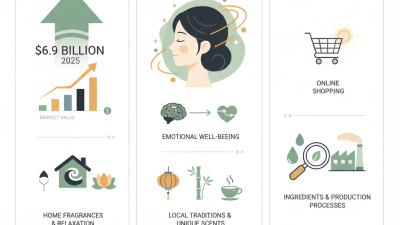
The global Scent Candle market is expanding, but buyers should examine more than fragrance popularity. Grand View Research estimates that the global scented candles market reached approximately USD 2.9 billion in 2023. Its report also projects continued growth through 2030, supported by home décor, wellness, and premium gifting demand. However, market estimates differ between research firms. Definitions, regions, and product categories are not always consistent.
For global buyers, the best manufacturers combine dependable wax quality, stable fragrance performance, and documented production controls. A candle should burn evenly, release fragrance gradually, and arrive with secure packaging. Small details matter. Think of a clean glass vessel, a centered wick, and a label that remains readable after handling. The National Candle Association identifies fragrance as a leading factor influencing candle purchases. That finding supports scent development, but it does not replace safety testing or supplier verification.
Kathy LaVanier, a candle-industry educator and former National Candle Association president, has stated, “Candle safety is a shared responsibility.” Her point remains practical for international sourcing. Buyers should request test records, ingredient documentation, factory quality procedures, and clear private-label capabilities. Certifications can help, but they should be checked rather than accepted at face value. This is where many sourcing guides become too confident. A manufacturer may offer beautiful samples yet struggle with repeatable batches, export packaging, or realistic production timelines.
This guide evaluates top Scent Candle manufacturers for global buyers through those real-world criteria. It considers product quality, customization, manufacturing experience, communication, and supply reliability. No supplier is perfect. The right choice depends on market positioning, order volume, compliance needs, and the buyer’s willingness to verify every important claim.

A top scented candle manufacturer combines practical experience, technical control, and dependable communication. The factory should understand how wax, fragrance, wick, and vessel materials work together. A pleasant scent alone is not enough. A stable candle should burn evenly, resist tunneling, and avoid excessive soot under tested conditions.
Reliable manufacturers document each batch from raw material receipt to final packing. Buyers should expect fragrance specifications, safety data, wick testing, burn records, and clear quality procedures. Samples should reflect real production, not only a carefully prepared prototype. Ask how the factory manages color variation, glass defects, fragrance consistency, and delayed materials. Small details matter.
A capable team tests candles at different room temperatures and burning intervals. It checks flame height, melt-pool width, scent performance, and container temperature. Production staff should also understand applicable labeling, packaging, and product safety requirements in each target market. However, no manufacturer is flawless. A polished audit report may not reveal every production weakness. My own review would include factory communication, sample changes, and how openly the team discusses failures. Honest responses often reveal more than confident promises. One overlooked wick issue can damage an entire shipment. That risk deserves careful testing, written records, and steady follow-up before a global order moves forward.
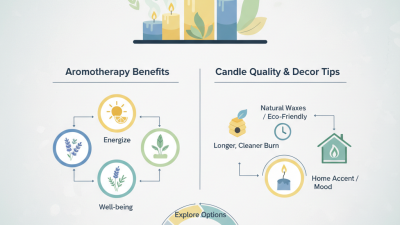
Global candle purchasing is not a fragrance contest alone. Supplier evaluation must connect scent quality, safety, consistency, and delivery evidence. Fortune Business Insights valued the global scented candle market at USD 3.54 billion in 2023, projecting USD 4.91 billion by 2030. Grand View Research also identifies steady growth in the wider candle market. This growth increases supplier choice, but rushed sampling remains a real risk. A capable manufacturer should provide fragrance documentation, wax specifications, wick details, batch records, and recent test results.
Ask for repeatable proof, not attractive samples. Review burn-test protocols covering flame height, soot, tunneling, melt pool, and total burn time. ASTM candle-safety standards offer useful technical references. IFRA conformity documents help assess fragrance-use limits. Check whether the supplier supports GHS-compliant safety data sheets and destination-market labeling. These documents do not replace independent testing. They create a traceable starting point.
Commercial reliability deserves equal attention. Compare minimum order quantities, pilot-run terms, production capacity, inspection points, carton protection, and lead-time history. The supplier should explain how rejected batches are isolated and corrected. Request two or three production samples, not one perfect sample. One sample proves little. I would also score communication speed and change-control discipline. A supplier may pass a factory audit yet struggle during seasonal demand. No scorecard is perfect. Recheck evidence after the first shipment, especially when fragrance, vessel, or packaging changes.
Use this weighted framework to compare global candle suppliers. Product safety and regulatory compliance receive the highest weighting because documentation, material traceability, and market-specific requirements directly affect import eligibility and customer safety.
Leading scented candle manufacturers differ sharply by market and region. Grand View Research estimates the global scented candle market reached about USD 2.2 billion in 2023. Its report forecasts roughly 5.2% annual growth through 2030. North American manufacturers often focus on premium fragrances, strong cold throw, and gift-ready packaging. European producers compete through wax traceability, refined design, and lower-impact materials. Asia-Pacific suppliers usually offer broader production capacity, flexible private-label services, and competitive minimum order quantities.
The U.S. National Candle Association places annual American candle sales near USD 3.14 billion. That figure shows the market’s scale, but it does not measure scented products alone. Regional comparisons can therefore mislead buyers. In my experience, a reliable manufacturer needs more than attractive samples. Buyers should review fragrance documentation, burn-test records, vessel safety checks, batch consistency, and factory audit results. A supplier may perform well in one climate and fail in another. Humidity, shipping temperature, and local consumer preferences matter.
Tips: Ask for three production samples from different batches. Test them in the target region. Confirm lead times, carton strength, labeling requirements, and fragrance limits before signing. Reports from Grand View Research and trade databases provide useful direction, but factory evidence remains more persuasive. Growth forecasts are helpful, not perfect. A careful buyer should question unusually low prices and vague sustainability claims.
Global buyers should assess more than fragrance strength and packaging. Grand View Research valued the global scented candle market at about USD 2.24 billion in 2023, with continued growth expected through 2030. This expansion increases supplier choice, but it also raises quality risks. Reliable manufacturers should provide batch records, burn-test results, wick specifications, and safety data sheets. A beautiful jar is not proof. Buyers should verify wax consistency, fragrance loading, soot control, and stable burning across production batches.
Customization should include fragrance development, vessel dimensions, label artwork, cartons, and minimum order quantities. However, every change needs testing. A wick that works in a small tin may fail in a large glass vessel. For international distribution, buyers can request evidence aligned with relevant ASTM and EN candle-safety standards. IFRA conformity documents can support fragrance compliance, while ISO 9001 certification may indicate controlled production systems. Certifications help, but audits and sample testing still matter.
Sustainability claims require careful review. FSC-certified paper, recycled packaging, responsibly sourced wax, and transparent supplier records are practical evaluation points. The International Energy Agency’s lifecycle research reminds purchasers that materials and transport influence environmental impact, not only the wax itself. Soy or plant-based wax is not automatically sustainable. Ask for chain-of-custody evidence, packaging weights, and waste data. The National Candle Association reports that candles are frequently purchased as gifts, so appearance matters, but dependable performance protects repeat sales. Some supplier claims remain vague. That deserves questioning.
Selecting a scent candle manufacturer requires more than comparing catalog photos and quoted prices. Experienced buyers begin with a clear product brief: wax type, vessel size, fragrance profile, burn time, target market, packaging, and annual volume. Request physical samples from at least three factories. Test them in quiet rooms, not only under showroom lights. Note cold throw, hot throw, melt-pool timing, soot, wick noise, and label adhesion. Small details matter.
A reliable manufacturer should explain raw-material sources, fragrance documentation, batch controls, and final inspections without hesitation. Ask for recent test reports, production photographs, and a sample batch record. Confirm whether the factory can repeat the same scent across different lots. Manufacturing experience becomes visible in practical answers, such as how they correct tunneling or manage vessel temperature. A polished presentation is not proof. It can hide weak process control.
Compare landed cost, not just unit price. Include tooling, cartons, testing, freight, duties, and possible rework. Check minimum order quantities, lead times, payment terms, and complaint procedures in writing. Verify that packaging and candle claims meet the destination market’s requirements. A small pilot order can reveal more than a long sales call. Keep samples for later comparison. I have learned that even a promising supplier may miss a deadline or vary a color. That is uncomfortable, but useful. Choose the partner with transparent records, responsive corrections, and capacity you can verify.
| Evaluation Dimension | Recommended Benchmark | Why It Matters to Global Buyers | Evidence to Request | Risk Signal | Priority |
|---|---|---|---|---|---|
| Product Compliance | Fragrance documentation, candle safety testing, warning labels, and market-specific requirements completed before shipment. | Requirements vary by destination. Missing documentation can cause customs delays, product recalls, or marketplace restrictions. | Safety data sheets, fragrance certificates, test reports, labeling artwork, and a documented compliance checklist. | Documents are generic, outdated, or unavailable for the exact fragrance, vessel, wick, and wax combination. | Critical |
| Fragrance Quality | Stable scent profile from cold throw to hot throw, with documented fragrance load limits for the selected wax system. | Scent performance strongly affects repeat purchases, reviews, and customer satisfaction. | Fragrance samples, allergen information, IFRA-related documentation where applicable, and batch comparison records. | Strong fragrance is promised without test conditions, usage rate, curing time, or material disclosure. | Critical |
| Burn Performance | Consistent melt pool, controlled flame, acceptable soot level, and no excessive vessel heating during testing. | Wick, wax, fragrance, vessel diameter, and dye interact; a formula that works in one container may fail in another. | Burn-test protocol, test photos or videos, wick specification, candle dimensions, and batch records. | Only a short demonstration is provided, or testing does not use the final production packaging. | Critical |
| Minimum Order Quantity | MOQ should match the buyer’s launch volume, forecast accuracy, storage capacity, and cash-flow plan. | Low MOQs reduce inventory exposure, while higher volumes may improve unit economics and customization options. | Separate MOQs for stock packaging, custom vessels, custom fragrance, printed cartons, and private-label production. | One high MOQ is quoted for every option, with no distinction between standard and customized components. | High |
| Sampling Process | Pre-production samples should represent the final wax, wick, fragrance concentration, vessel, label, and packaging. | A representative sample reduces the risk of approving a product that differs from mass production. | Sample approval form, revision history, sample fees, lead time, and retained reference sample policy. | Samples use substitute materials or the supplier refuses written approval before production. | High |
| Production Lead Time | Obtain separate timelines for sampling, raw-material procurement, production, quality inspection, and export preparation. | Component availability and seasonal demand can affect the delivery date more than candle assembly time. | Written production schedule, material reservation plan, holiday calendar, and delay-notification procedure. | Only one total number of days is quoted without identifying dependencies or buffer time. | High |
| Quality Control | Documented inspections should cover appearance, dimensions, fill weight, wick position, label placement, packaging, and burn consistency. | Consistent inspection reduces defects across large and repeat orders. | Incoming, in-process, and final inspection checklists; defect classification; corrective-action records. | Quality is described only as “strict” without measurable acceptance criteria or inspection records. | Critical |
| Material Traceability | Wax, fragrance, wick, vessel, and packaging components should be traceable to supplier lots or production batches. | Traceability supports complaint investigation, recalls, and repeat-order consistency. | Batch codes, raw-material lot records, retained samples, and production-date documentation. | Materials are changed without notice or finished goods cannot be linked to production records. | High |
| Customization Capability | Ability to customize fragrance, wax, wick, vessel, color, label, carton, inserts, and gift-set configuration. | Customization can support differentiation, but each change may require additional testing and a higher MOQ. | Customization menu, tooling charges, color tolerances, artwork specifications, and approval workflow. | Customization is accepted verbally without cost, timeline, ownership, or testing details. | Medium |
| Packaging & Transit Protection | Packaging should protect glass, prevent fragrance leakage, and withstand the planned transport and handling conditions. | Candles are vulnerable to breakage, surface damage, heat exposure, and label abrasion during international logistics. | Packaging drawings, drop or vibration test method, carton dimensions, pallet plan, and product photos after packing. | Packaging is selected only for appearance, with no transport test or carton-strength information. | High |
| Export & Logistics Support | Clear Incoterms, carton data, commercial invoice details, packing list, HS-code guidance, and export documentation. | Accurate shipping information helps buyers calculate landed cost and avoid clearance problems. | Sample commercial invoice, packing list, carton dimensions, gross weight, net weight, and shipping quotation. | Freight terms, weights, or export responsibilities remain unclear until after production. | High |
| Cost Transparency | Quotation should separate product cost, tooling, sampling, artwork, packaging, inspection, freight, and taxes or duties. | A low unit price may not represent the lowest total landed cost. | Itemized quotation with validity period, currency, payment terms, price breaks, and surcharge conditions. | Unexplained changes occur after sample approval or important costs are excluded from the quotation. | Critical |
| Communication & Project Control | One accountable project contact, written specifications, milestone updates, and response-time expectations. | Clear communication reduces specification errors across time zones and languages. | Meeting notes, specification sheet, approval log, escalation contact, and production update schedule. | Different contacts provide conflicting information or decisions are not recorded in writing. | High |
| Sustainability Evidence | Environmental claims should identify the exact material, percentage, scope, and supporting documentation. | Terms such as “eco-friendly” can be too broad to evaluate without material-level evidence. | Material declarations, recycled-content information, packaging specifications, and relevant certification documents. | Unqualified sustainability claims are made without test reports, certificates, or defined criteria. | Medium |
| Commercial Reliability | Use a written purchase agreement covering specifications, tolerances, payment milestones, inspection rights, defects, and remedies. | Written terms provide practical protection when quality, quantity, timing, or packaging disputes occur. | Contract template, warranty terms, inspection procedure, approved sample reference, and corrective-action process. | The supplier avoids written commitments or requires full payment before key specifications are confirmed. | Critical |
Buyer tip: Compare manufacturers using the same product specification and score each dimension from 1 to 5. Confirm all compliance, cost, lead-time, and quality claims with written evidence before placing a production order.